Jayanto Tan (Australia)
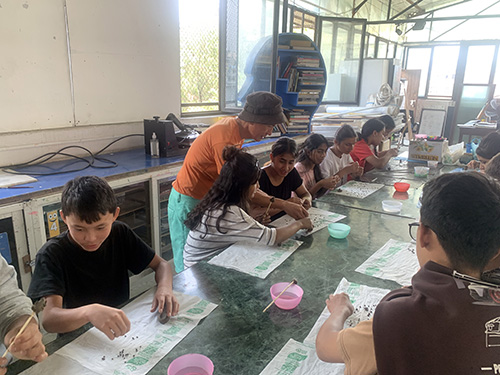
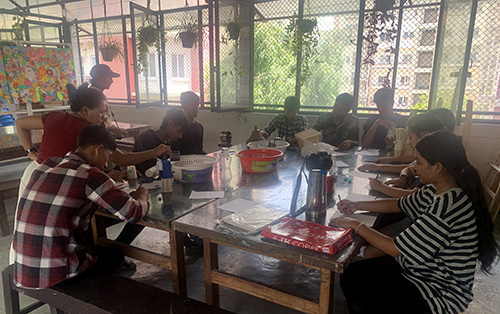
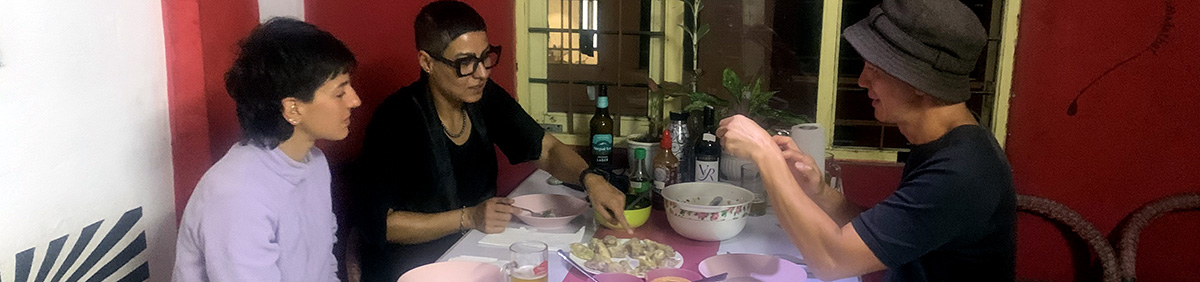
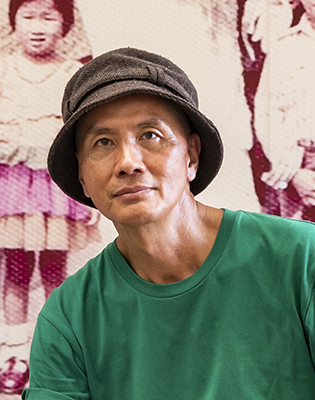 Jayanto Tan is an Indonesian-born, Sydney-based multidisciplinary artist whose practice explores migration, cultural identity, memory, ritual, and belonging. Working across drawing, ceramics, sculpture, installation, and performance, he creates immersive environments that weave together personal narratives, Chinese-Indonesian heritage, and communal traditions. Through recurring motifs of gardens, tea ceremonies, and ritual gatherings, Tan invites audiences to reflect on shared histories, displacement, and the possibilities of cultural exchange.
He holds a Master of Fine Arts in Drawing and a Bachelor of Fine Arts in Ceramics from the National Art School, Sydney. His work has been presented in numerous solo and group exhibitions across Australia, including at Bathurst Regional Art Gallery, Counihan Gallery, Wangaratta Art Gallery, Verge Gallery, Metro Arts, Casula Powerhouse Arts Centre, and the Chinese Garden of Friendship. His practice has received widespread recognition through prestigious awards and finalist selections, including the Georges River Sculpture Art Prize, the Dobell Drawing Prize, the Blake Art Prize, and the Fisher’s Ghost Art Award.
Represented by Art Atrium, Sydney, Jayanto Tan continues to develop projects that connect contemporary art with ritual, hospitality, and community participation. His work transforms everyday acts of gathering into poetic experiences that celebrate cultural diversity while fostering dialogue, empathy, and meaningful human connection across different communities.
Federica Maria Spada (Italy)
Residency Period: May and June
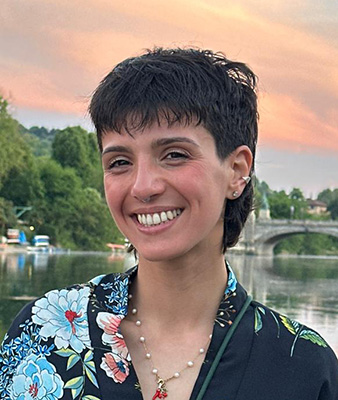 Federica Maria Spada (b. 1998, Sassari, Italy) is an Italian curator and researcher whose practice explores the relationship between art, identity, and marginalized cultural territories. Raised in Sardinia, a region often reduced to stereotypes despite its rich and complex history, her work examines how local artistic practices can challenge dominant cultural narratives and foster social transformation.
Her academic research in Contemporary Art History focused on six Sardinian women artists, investigating how their experiences beyond the island shaped their artistic practices and how they re-engaged with their communities through urban, relational, and socially engaged art. Her study also examined the contrasting trajectories of artists Narcisa Monni, who remained in Sardinia to educate emerging artists, and Silvia Argiolas, who pursued her career in Milan.
Having also left Sardinia to pursue her education and professional development, Spada is committed to returning her knowledge to her homeland while creating international opportunities for artists from underrepresented regions. Her curatorial vision promotes equitable cultural exchange, encourages dialogue between diverse communities, and challenges Eurocentric perspectives by recognizing the intrinsic artistic value of local contexts. Through research, collaboration, and cross-cultural initiatives, she seeks to amplify overlooked voices and build meaningful connections across different artistic landscapes.